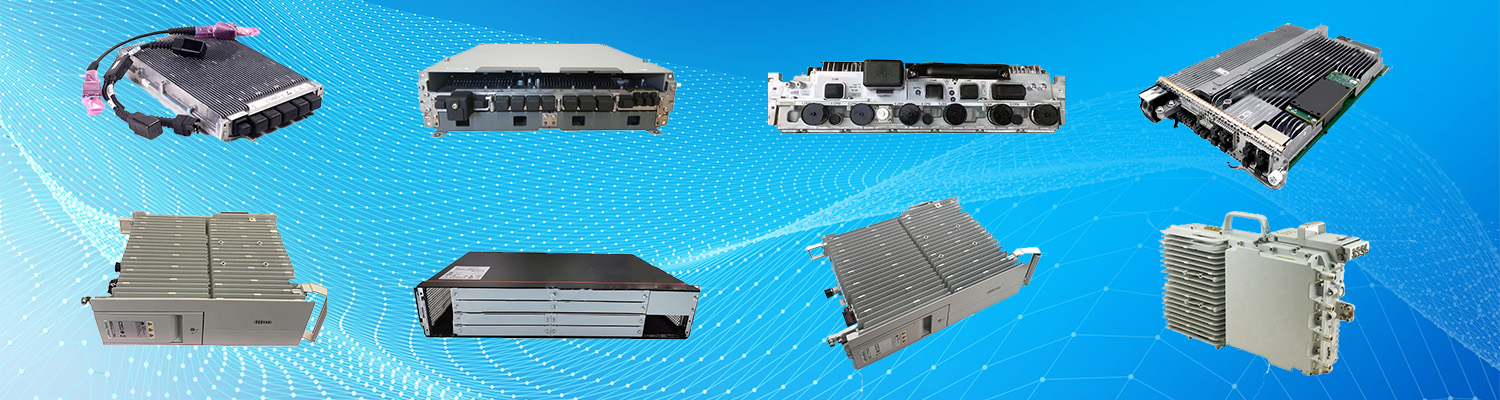
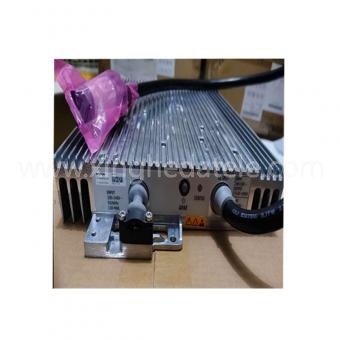
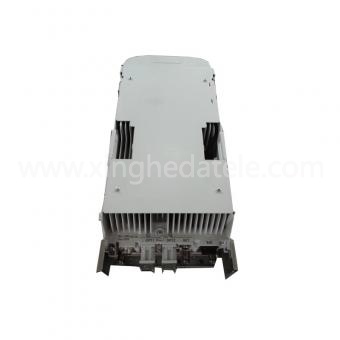
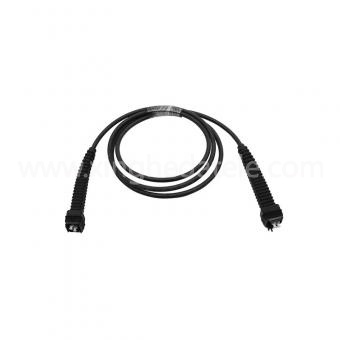
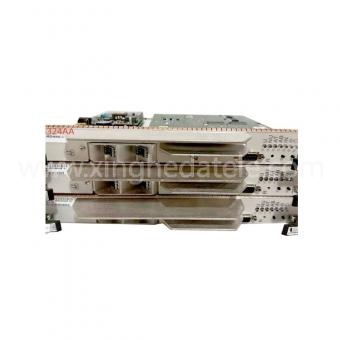
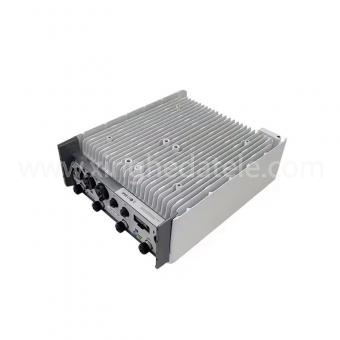
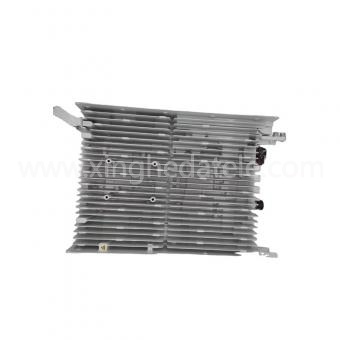
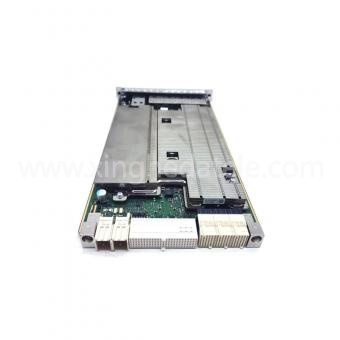
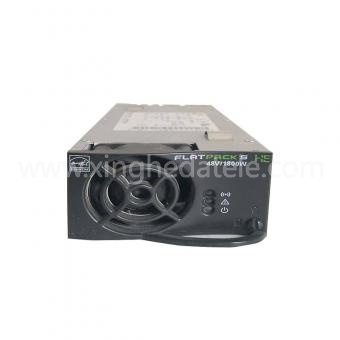
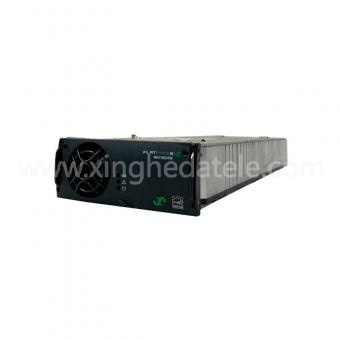
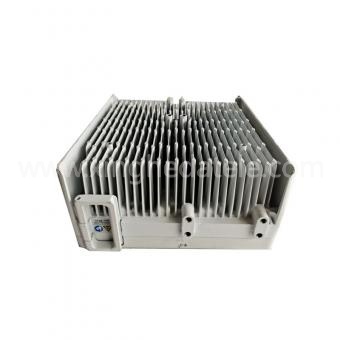
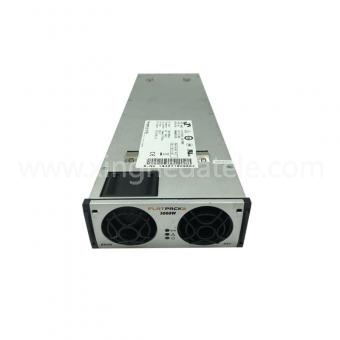
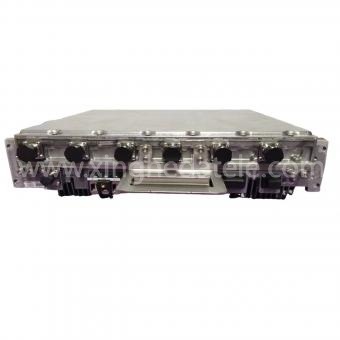
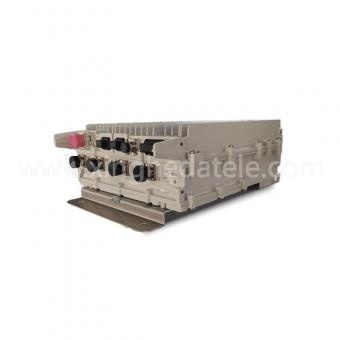
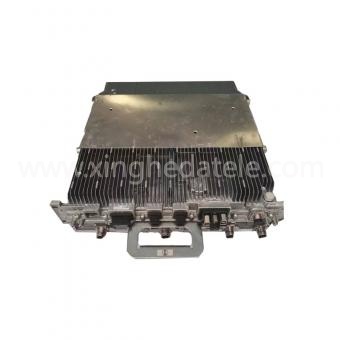
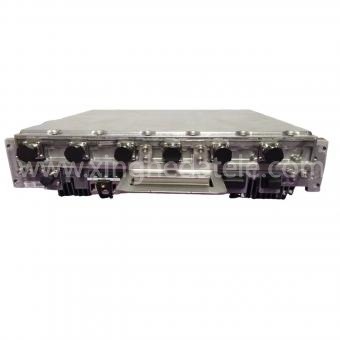
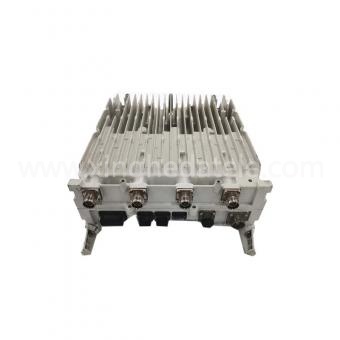
Nokia FBBC

News

  • When Will 4G Be Phased Out?
    When Will 4G Be Phased Out? Jan 28, 2023
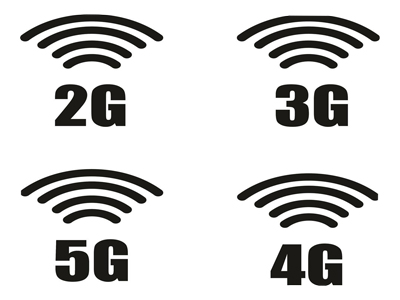
    2G and 3G networks are shutting down rapidly around the world. Some carriers have already sunsetted their 2G and 3G networks, while most other operators have at least made plans to shut them down. The main reason for network shutdowns is that the carriers have limited spectrum available for expansion. In order to provide a faster, more responsive network to their customers, they must repurpose the spectrum to support newer, more efficient cellular technology. Besides, expected cost efficiency, increasing demand for 4G & 5G, as well as government regulations will only encourage the operators to speed up the phase-out and shutdown. When Will 2G Shut Down? In Europe, around eight operators are planning to switch off their 2G network by 2025. Many operators seem to suggest that 2G in Europe will be around until 2030 and this is mainly due to implications of the M2M and IoT applications. In particular, the EU mandated eCall, where long term agreements are in place, will need to be supported by the 2G technology before the work towards migration to IMS voice is fully completed. For Asia, 2G in countries like Japan was phased out a long time ago. The trend will continue with other countries and operators. There are around 29 operators who are looking to shut down 2G by 2025 and 16 shutting down 3G by 2025. Notably, Tawain closed both 2G and 3G almost 3 years ago. The Americas especially the US is shutting down 2G networks on an accelerated scale. Around 15 operators in 7 countries have announced the closure of 2G by the end of 2025. For Oceania, 2G is almost phased out. In Australia all 3 operators have shut down their 2G by the end of 2018 and 3G is on the way with Telstra the only one announcing a timeline for the end of 2024. Africa is the only region where no 2G or 3G shutdowns have been announced so far but it will be part of future planning once newer technologies penetrate more. When Will 3G Go Away? 3G is likely to shutdown before 2G. 3G has long been a mainstay because of its voice capabilities—a feature 4G struggled with early on. But with 4G now able to handle the majority of voice traffic, and 2G being the more attractive option to support most IoT applications, 3G no longer has much reason to stick around. So critical IoT applications that run on 3G such as CCTV will need to switch connectivity—and fast. 2G/3G Sunset Schedule Below you can see when and which providers will say goodbye to 2G/3G. When Will 4G LTE Be Phased Out? (Not for a Long Time!) Like anything else, 4G will become obsolete one day. However, that day is far enough in the future that IoT deployments today and in the foreseeable future will be deployed on 4G networks. To transition to 4G LTE, carriers needed to shut down the 3G spectrum in order to “make room” for the new networks. 5G is fundamentally different in two ways: First, it uses new spectrum, such as mid-band or high-band spectrum. And second, it can work in conjunction with 4G in existing spectrum. That is to ...
    view details
  • Nanyue, one of the five mountains in China
    Nanyue, one of the five mountains in China Jan 09, 2023
    China is known as the Three Mountains and Five Mountains, and Hengshan Mountain is one of them. The characteristics of Hengshan Mountain in the south, such as the height of Zhurong Peak, the beauty of Sutra Hall, the wonder of Water Curtain Cave, and the depth of Fangguang Temple, can be called the four wonders of Hengshan Mountain in the south. The flowers in spring are colorful, the clouds in summer are smooth, the sunshine in autumn is beautiful, and the snow in winter is cold and beautiful. The landscape of the Xiangjiang River has nurtured the unique scenery of Hengshan Mountain. The journey to Hengshan Mountain in the south is the most beautiful. The best time is on the way. Walk slowly, step by step, and have a happy day trip. [May all the people we care about be safe and healthy, have a successful career and achieve everything we want.]
    view details
  • Types of Cables
    Types of Cables Nov 24, 2022
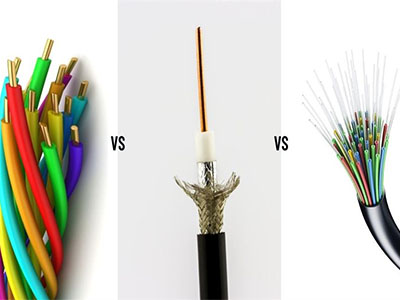
    Fiber optic cable, twisted pair cable, and coaxial cable are the three main types of network cables used in communication systems. Each of them is different and suitable for various applications. Coaxial Cable Coaxial cable, or coax cable, is a type of copper cable which has an inner conductor surrounded by foam insulation, symmetrically wrapped by a woven braided metal shield, then covered by in a plastic jacket (as shown in the following image). This unique design allows coaxial cable runs to installed next to metal objects such as gutters without the power losses that occur in other types of transmission lines. Fiber Optic Cable Fiber optic cable consists of a core, cladding, buffer, and jacket. The core is made from thin strands of glass or plastic that can carry data over a long distance. The core is wrapped in the cladding; the cladding is wrapped in the buffer, and the buffer is wrapped in the jacket. Fiber optic cables send digital data at the speed of light. A fiber optic cable can contain a varying number of these glass fibers -- from a few up to a couple hundred, so optical fiber is the core part of optical fiber cable. Twisted-pair cables The twisted-pair cable was primarily developed for computer networks. This cable is also known as Ethernet cable. Almost all modern LAN computer networks use this cable. The TIA/EIA 568 divides the twisted-pair cable into several categories. The following table lists the most common and popular categories of twisted-pair cable. The easiest way to select a cable is to pick one with the range and performance you need.
    view details
  • 2022 Analysis on the Nokia 5G AirScale BBU
    2022 Analysis on the Nokia 5G AirScale BBU Nov 24, 2022
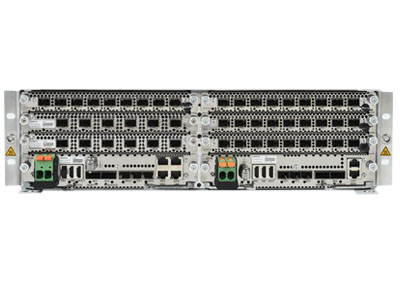
    This report provides a comprehensive analysis of the Nokia Networks 5G AirScale Digital Baseband Unit (BBU). The configuration of the 5G AirScale is: AMIA Subrack ASIK Common Plug In Unit ABIL Capacity Plug In Unit Features System Functional Description System Level Block Diagrams High Level Mechanical Analysis Heat Sink High Level PCB Analysis Component Diagrams Semiconductor/component locations on PCB High Level Bill of Materials Semiconductor ICs (ASICs, FPGAs, memory, logic, power, etc.) Passive/other components (Transformers, Power inductors, Power capacitors, power/datacom/optical connectors) Complete Part Number/Marking Component Manufacturer Identification Function Component Description Package Type Excludes analysis of low power passive chip resistors, capacitors, and inductors CHAPTER 1: AMIA SUBRACK AMIA Guiderails ASIx Blind Slot Frame ABIx Blind Slot Frame AMIA Chassis: External Views and Dimensions AMIA Chassis: Backplane and Fan Units AMIA Backplane CHAPTER 2: ASIK PLUG IN UNIT ASIK Front Panel & Handles Power Supply Unit (PSU) PSU Top Cover Heatsink PSU Bottom FCTL Heatsink PSU Printed Circuit Board Analysis PSU Input DC Voltage Connector Assembly PSU DC Busbar Assembly ASIK FCTL PCB eUSB Flash Card OCXO Module ASIK FCTL Bottom Cover CHAPTER 3: ABIL ABIL Front Panel ABIL ASPA Heatsink ABIL ASPA Cover ABIL ASPA PCB AirScale System Module This baseband module is designed to be agile and enable long-term network evolution. The in-node modularity of the AirScale System Module is key to lean entry and decoupled scalability of the compute power for radio access network layers 1, 2, and 3 and integrated transport functionality – essential for the rapidly changing traffic requirements of new use cases and deployment scenarios of the 5G era. The AirScale System Module simplifies 2G, 3G, 4G and 5G Single RAN deployments, streamlines multi-band sites and powers multi-site baseband hotels.
    view details
  • What is an RRU ?
    What is an RRU ? Nov 24, 2022
    What is an RRU? Remote radio unit (RRU) applies to distributed base stations and macro+distributed scenario, radio frequency unit (RFU) applies to macro base stations. They are used to transmit and receive baseband signals, modulate and demodulate RF signals, process data, and amplify the power of signals. Huawei has many RRU models, from the first generation to the fourth generation, with more powerful functions. RRUs are as follows: RRU3971, RRU3959, RRU3959w, RRU3953, RRU3953w, RRU3952m, RRU3952, RRU3939, RRU3938, RRU3936, RRU3838, RRU3839, RRU3958, RRU3832, RRU3824, RRU3826, RRU3668, RRU3281, RRU3269, RRU3268, RRU3262, RRU3260, RRU3249, RRU3276, RRU3853, RRU3962, and 5000 series RRUs. Huawei RRU3000 Series RRU Model XTXR Frequency band(MHz) Supported RATs Device   parameters RRU3004 2T2R 900 1800 GSM RRU3004 RRU3308v1 2T2R 850 900 1800 1900 GSM RRU3308v1 RRU3008v2 2T2R 900 GSM RRU3008v2 RRU3168 8T8R 1900 LTE(TDD) RRU3168 RRU3201 2T2R 700 2600 LTE(FDD) RRU3201 RRU3203 2T2R 700 LTE(FDD) RRU3203 RRU3220 2T2R 800 LTE(FDD)、LM RRU3220 RRU3220E 2T2R 1800 LTE(FDD) RRU3220E RRU3221 2T2R 2600 LTE(FDD) RRU3221 RRU3222 2T2R 800 LTE(FDD)、LM RRU3222 RRU3229 2T2R 2600 LTE(FDD) RRU3229 RRU3230E 2T2R 1800 LTE(FDD)、LTE(NB-IoT)、LM RRU3230E RRU3232 4T4R 3500 LTE(TDD) RRU3232 RRU3236E 2T2R 2300 3500 LTE(TDD) RRU3236E RRU3240 2T4R 2600 LTE(FDD) RRU3240 RRU3249 2T2R 700 LTE(FDD) RRU3249 RRU3251 2T2R 2300 LTE(TDD) RRU3251 RRU3252 4T4R 2300 LTE(TDD) RRU3252 RRU3253 8T8R 2600 LTE(TDD) RRU3253 RRU3256 4T4R 2300 2600 3500 LTE(TDD) RRU3256 RRU3259 8T8R 2600 LTE(TDD) RRU3259 RRU3260 2T4R 2600 LTE(FDD) RRU3260 RRU3262 2T4R 700 850 2600 LTE(FDD)、LM、LN(SUL) RRU3262 RRU3268 2T2R 700 800 2600 LTE(FDD)、LM RRU3268 RRU3269 2T2R 700 LTE(FDD)、LM RRU3269 RRU3276 4T4R 2300 2600 LTE(TDD) RRU3276 RRU3278 8T8R 3500 3650 3700 LTE(TDD) RRU3278 RRU3278u 8T8R 3500 LTE(TDD) RRU3278u RRU3279 8T8R 2300 2600 LTE(TDD) RRU3279 RRU3281 4T4R 2600 LTE(FDD) RRU3281 RRU3668 2T2R 450 LTE(FDD) RRU3668 RRU3810E 1T2R 850 1900 2100 UMTS RRU3810E RRU3804 1T2R 850 1900 AWS 2100 UMTS RRU3804 RRU3805 2T2R 850 1900 UMTS RRU3805 RRU3806 1T2R 2100 UMTS RRU3806 RRU3808 2T2R AWS 2100 UMTS、LTE(FDD)、UL RRU3808 RRU3821E 2T2R 1800 LTE(FDD) RRU3821E RRU3824 1T2R 2100 UMTS RRU3824 RRU3826 1T2R 2100 UMTS RRU3826 RRU3828 2T2R 2100 UMTS RRU3828 RRU3829 2T2R 2100 UMTS RRU3829 RRU3832 2T4R AWS 2100 UMTS、LTE(FDD)、UL RRU3832 RRU3838 2T2R 2100 UMTS RRU3838 RRU3839 2T2R 2100 UMTS RRU3839 RRU3841 4T4R AWS LTE(FDD)、LM RRU3841 RRU3853 2T4R UMTS UMTS RRU3853 RRU3908v1 2T2R 850 900 1800 1900 GSM、UMTS RRU3908v1 RRU3908v2 2T2R 850 900 GSM、UMTS、GU RRU3908v2 RRU3926 1T2R 900 1800 GSM、UMTS、LTE(FDD)、GU、GL、UL、LTE(NB-IoT)、GM、UM、LM、GUM、GLM、ULM RRU3926 RRU3928 2T2R 900 GSM、UMTS、LTE(FDD)、GU、GL、UL、GUL、LTE(NB-IoT)、GM、UM、LM、GUM、GLM、ULM、GULM RRU3928 RRU3929 2T2R 900 GSM、UMTS、LTE(FDD)、GU、GL、UL、GUL、LTE(NB-IoT)、GM、UM、LM、GUM、GLM、ULM、GULM RRU3929 RRU3930E 2T2R 2100 UMTS、LTE(FDD)、UL RRU3930E RRU3936 1T2R 850 900 1800 1900 GSM、UMTS、GU、LTE(FDD)、GL、UL、L...
    view details
  • Optical Transceiver Interoperability and Compatibility Guide
    Optical Transceiver Interoperability and Compatibility Guide Dec 06, 2022
    Understand SFP compatibility To understand the SFP compatibility, we’d better get to know the multi-source agreement (MSA) first. MSA is an agreement between many different transceiver manufacturers to make standardized products. Instead of being standardized by official standards, SFP is specified by MSA. It defines SFP modules including the size, connectors, and signalling to assure SFP modules are compatible with branded SFP devices. There are also MSA standards for other optical transceiver like SFP+, XFP, QSFP, etc. SFP transceivers meeting the SFP Compatibility requirement are usually compatible across a range of telecoms vendors’ hardware, therefore users can mix and match components from different vendors. However, some manufacturers ensure that their devices are only compatible with specific SFPs, complicating purchase decisions. In general, if an SFP can be connected to cables and switches correctly, and helps devices run successfully as you want, its SFP compatibility is qualified. Importance of SFP compatibility As we all know, each transceiver module is unique and holds its own information in EEPROM, so do SFP and SFP+ transceivers. And this memory is coded with specific identifiers such as pert numbers and manufacturer details. When the module is installed, the host device then checks the memory for the correct information to confirm compatibility. However, not all vendors disclose if the SFP slots on their equipment are compatible with other SFP models. The major manufacturers like Cisco, HP, Juniper and so on, advertise that only the SFP modules with their brand can work with their devices. This further worsens the confusion for the user and prevents them from making a clear-cut choice when it comes to buying SFP products. As a matter of fact, compatible SFP and SFP+ contain the same production technology as the original brands. In other words, they have the same hardware. Compatible SFP modules are functionally identical when compared to their OEM versions. They even have the same performance levels, and so the customer does not lose out at all. Moreover, branded SFP products are much more expensive than their compatible counterparts. What types of Optical Transceivers are available? There are several types of optical transceivers are available in the market. The optical transceivers can be classified on the basis of many factors such as: Form-factor (Physical Dimensions) Bandwidth (100 Mbps, 1 Gbps, 10 Gbps, 40 Gbps, 100 Gbps etc.) Application (Fibre Channel, Ethernet, InfiniBand etc.) Let us study the classification of optical transceivers based on the form-factor. Optical transceivers are available in form-factors, mainly: Gigabit Interface Converter, commonly referred to as GBIC Small Form-Factor Pluggable, commonly referred to as SFP Quad Small Form-Factor Pluggable, commonly referred to as QSFP C Form-Factor Pluggable, commonly referred to as CFP
    view details

1 ... 5 6 7 8

A total of 8 pages

Sign Up To Newsletter
To stay up-to-date on our promotions, discounts, sales, news and more.
Submit

Leave A Message

Leave A Message
If you have questions or suggestions,please leave us a message,we will reply you as soon as we can!

Home

Products

whatsApp

contact